
Searching Dyer County Criminal Dockets
Dyer County posts no public search screen for trial-court records. The clerk is the starting point. The Dyer County office directory lists Circuit Court Clerk T.J. Jones in Room 200 at 101 West Court Street, Dyersburg. Dial 731-286-7808 for Circuit and Criminal Court records, or 731-286-7809 for General Sessions. Counter hours run Monday through Friday, 8:30 a.m. to 4:30 p.m.
Bring the exact case number when you can. Without it, give the defendant's full name. Add a rough filing year, the charge, and the court. Written requests should name the document and ask about submission methods and the fee. The county contact form passes messages along, but it is not a docket database.
- Read the summons, indictment, citation, or notice and identify the named court.
- Call the correct clerk with the case number or exact party name and filing year.
- Ask for the latest public docket entry, next setting, status, and courtroom.
- Visit the counter to inspect public entries or obtain documents unavailable online.
- Request a plain or certified copy by the method and fee terms the clerk confirms.
Dyer Criminal Docket Court Routes
The court name drives the lookup. Felony preliminary matters often open in Dyer County General Sessions Court. They then move by indictment to Dyer County Criminal Court. Misdemeanors can land in General Sessions, Criminal or Circuit Court, or a municipal court. It depends on the charge and the court's jurisdiction. The Tennessee courts overview describes the limited civil and criminal reach of General Sessions courts.
| Court | Docket role | Contact |
|---|---|---|
| Criminal/Circuit | Felony trial-level cases | Room 200, 731-286-7808 |
| General Sessions | Preliminary hearings and misdemeanors | 731-286-7809 |
| Dyersburg City | City and authorized state matters | 731-288-2517 |
| Newbern City | Municipal citations | 731-627-3221 |
| Trimble Town | Charter criminal and traffic matters | 731-297-3955 |
Juvenile cases run through a separate, restricted channel at 731-286-7827. Do not assume public access.
Inside a Dyer County Criminal Docket
Think of a Dyer County criminal docket as a dated index, not the full file. It names the court, case number, State caption, defendant, charge, judge, status, settings, and outcome. A motion entry only proves the filing happened; the motion's text takes a clerk copy. No official guide to Dyer County case-number formats exists. Copy the number exactly as it appears on court papers.
| Case Number | The clerk identifier copied exactly from the indictment, notice, or record. |
|---|---|
| Charge | Offense and count information; police documents may remain separate. |
| Bond | Public amount, type, conditions, or modifications when entered. |
| Settings | Arraignment, appearance, motion, plea, trial, or sentencing dates. |
| Disposition | Plea, trial result, acquittal, dismissal, diversion, or transfer. |
| Documents | Indictments, motions, orders, judgments, and sentencing papers requested separately. |
Start with the latest entry, and tell a new setting apart from a final result. When legal effect matters, get the signed judgment.
The clerk may also hold a bond order, indictment, sentencing document, or probation-violation filing. Those papers never appear as an online image. Ask by docket date and title. If an entry is marked restricted, ask whether a public redacted version exists. Older Dyer County material may sit on paper or outside the active file room. Offer an approximate filing year, and let the clerk explain the archive process. The county Archives and Records Office is not proof of custody for court files; start with the court clerk, not the archive.
Dyer Indictment Arraignment Pattern
The 29th Judicial District local rules set a specific pattern for Dyer County. An indictment goes to arraignment the next Monday at 1:00 p.m. Otherwise it happens as soon as the court can manage. The accused and counsel must appear. After arraignment, the court sets an appearance date.
Treat the pattern as a guide, not a promise. Holidays, orders, filing timing, and resets can all shift the real date. Call the Circuit Clerk before traveling. Confirm the current time, courtroom, and type of setting.
For the framework behind these steps, turn to the official criminal procedure rules. They set out how criminal proceedings work statewide.
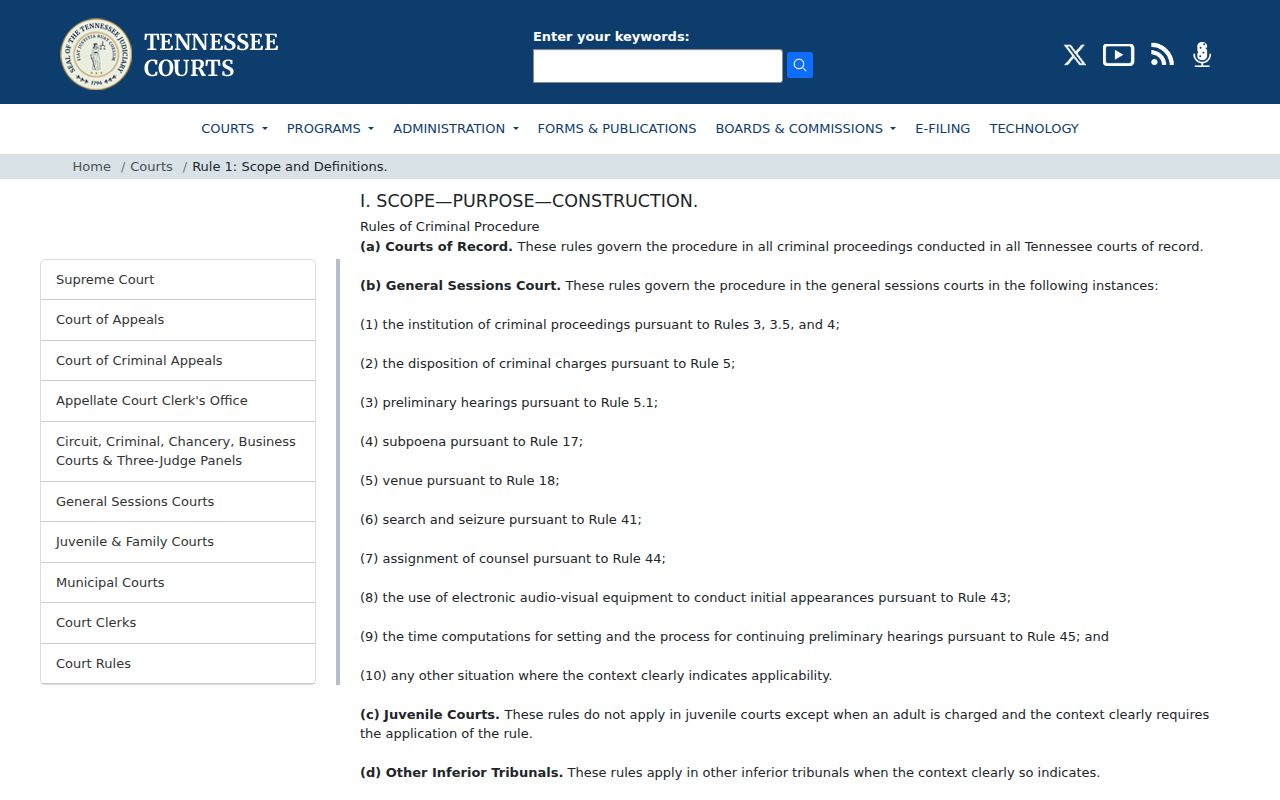
Those rules place General Sessions proceedings inside Tennessee's larger procedure. For any one Dyer County case, the clerk still has the answer.
How a Criminal Case Moves
A felony often opens with a complaint or warrant and a General Sessions stage. From there the docket can log a preliminary hearing, indictment, arraignment, and appearance date. Later entries may show motions, status events, and bond changes. A plea or trial, judgment, and sentencing may follow. Violations and appeals can keep the file active well after disposition.
Docket flow: Charge filed › Preliminary stage › Indictment › Arraignment › Pretrial › Plea or trial › Disposition › Sentencing.
At the Dyer appearance date, the local rules lay out four paths. An agreed plea, a trial set for a date certain, a reset to a definite date, or a dismissal. A pending charge or indictment is not a conviction.
Dyer Criminal Docket Outcomes
Do not blur outcome labels together. Their look in county statistics says nothing about how one case ended. When shorthand is unclear, rely on the signed order.
- Dismissal or nolle prosequi
- A charge ends without conviction; the order states the exact effect.
- Guilty plea as charged
- The plea resolves the charge as filed.
- Guilty plea to lesser charge
- The plea resolves a reduced charge.
- Conviction after trial
- A conviction follows trial, not a plea.
- Diversion
- A pretrial or judicial diversion entry whose terms require the order.
Dyer County publishes no online abbreviation list. Ask the clerk to decode any entry.
Dyer Criminal Docket Counts
The AOC annual report spans July 1, 2024 through June 30, 2025. It counts 1,086 criminal counts filed in Dyer and 1,172 disposed. Counts are not cases or people. One case can carry several counts. Dispositions can close filings from earlier years.
A yearly report breaks Dyer County criminal dispositions into buckets. Dismissals and nolle prosequi entries total 732. Guilty pleas as charged came to 325, while 82 pleas were to lesser charges. Trials produced 12 convictions and 3 acquittals. Read those totals as a snapshot, not a live docket or a conviction rate.
The offense grouping tells you what kind of cases were filed. Burglary and theft counts reached 136. Counts involving administration of government hit 156, other public-welfare counts 114. Probation violations came to 94. Assault counts hit 82. These broad labels are reporting categories, not the exact charge language from an indictment. For one Dyer County case, check the clerk. The charge block and signed disposition in the clerk record control. Another wrinkle: counts disposed in a given year can come from cases filed earlier. So that subtraction will not measure the pending caseload.
Courts That Hold Criminal Dockets
Which clerk you call depends on the charge. Dyer County Criminal and Circuit Court records sit with the Circuit Court Clerk. General Sessions keeps its own line. A city citation belongs to the Dyersburg, Newbern, or Trimble clerk instead. A city case is not a county felony docket. The city just sits inside Dyer County.
For appeals, Tennessee Public Case History starts where the appellate courts do. It covers the Supreme Court, the Court of Appeals, and the Court of Criminal Appeals. Once an appellate number appears, you can search. Use number, style, party, or organization. It does not replace the county trial clerk for Dyer County criminal docket work.
Dyer Recovery Court Case Records
The state's contact list gives one entry for the 29th Judicial District Recovery Court. It serves Dyer and Lake Counties. The address is 1400 Hornbrook in Dyersburg. The phone is 731-286-7827 extension 6. No separate public docket series appears in that listing.
Program activity usually surfaces inside the underlying case as probation, diversion, or treatment entries. Give the Circuit or General Sessions clerk the case number to search. Treatment details may be protected. The listing states no eligibility rule, program length, or separate numbering plan. So confirm those points with the program and the court directly.
Skip hunting for a stand-alone treatment docket. Search the underlying criminal case for public procedural entries instead. Ask the clerk how diversion, probation review, compliance hearings, and disposition get marked. A public procedural entry still does not open medical or treatment records to the public.
Sealed Dockets and Public Access
Tennessee Supreme Court Rule 34 starts from openness. Court records are public unless a law, rule, order, or judicial-function exception protects them. So a Dyer County docket may omit sealed filings, identifiers, juvenile material, and expunged charges. A missing result does not prove the case never existed.
When you ask the clerk, be specific. Say whether the file is public, sealed, expunged, juvenile, archived, or newly filed. Tennessee Public Records Act guidance requires requests to describe records with enough detail. Copy charges may apply.
Key access rules:
Rule 34 protects sealed documents, judicial work product, internal case-management data, and other confidential material.
TBI expungement guidance directs eligible requests to the local court where the arrest occurred.
If access is denied, request the rule or order and ask whether a redacted copy is available.